
Results
Since 2003, TulaHealth has remained committed to its mission of implementing innovative strategies to improve health, reduce poverty, and build social justice and equity in Central America.
TulaHealth is dedicated to working with the Ministry of Health in Guatemala to strengthen the capacity of primary health workers, so that they can provide culturally appropriate, quality healthcare services in their home communities.
This domestic mission has been strengthened and amplified by TulaHealth’s partnerships with agencies and organizations in Canada and beyond.
We continue to see improvement in health indicators, particularly concerning maternal, newborn, and child health, as well as sexual and reproductive health and rights (SRHR). Some notable achievements:
Between 2005 and 2024, TulaHealth has assisted in helping train 55,000 primary healthcare workers
Since 2005, 110 distance-education sites have been established in the four target regions of _______[NAME], each equipped with Internet-based distance education equipment and trained technical staff.
More than 500 Ministry of Health personnel have been trained on the methodologies of Internet-based distance education and problem-based learning.
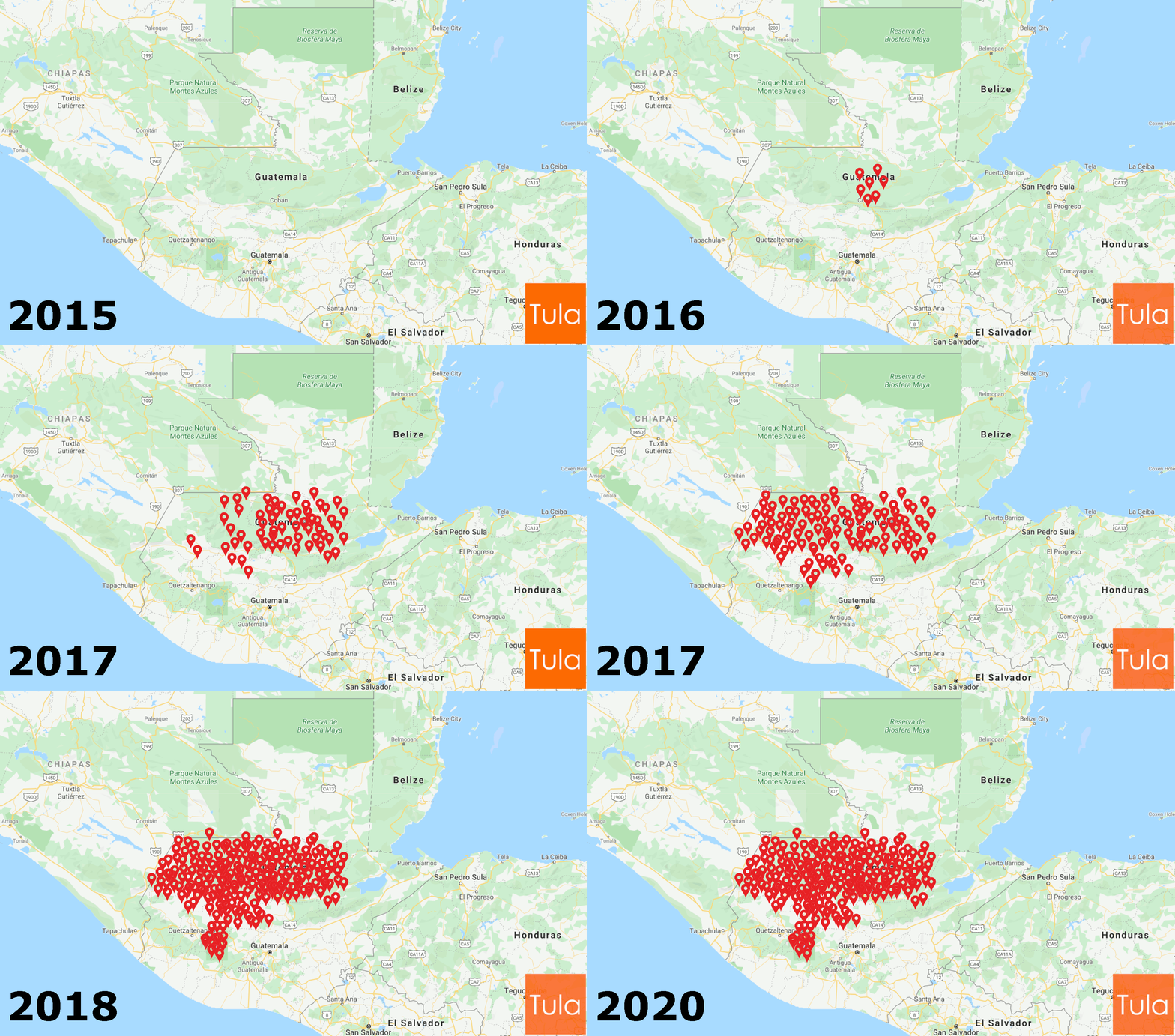
Since 2016, more than 4,900 primary health workers in the four target regions have been trained and equipped with a smartphone-based digital health ecosystem. Preferential rates for telecommunication services and technical support are provided by our partners at Tigo Guatemala.
Primary health workers have used the digital health ecosystem to make more than 4.6 million telephone calls (approximately 1 million calls per year), relating to patient follow-up, clinical consultation, and emergency transportation.
Primary health workers also use SMS and WhatsApp extensively to support communication and coordination.
Primary health workers have used the community digital health ecosystem to register more than 470,000 pregnancy cases to monitor their progression, including 110,000 adolescent pregnancies, and more than 830,000 child cases for nutrition monitoring.
Health education and promotion videos—which have been translated in more than [IF MORE THAN, WHAT NUMBER? OTHERWISE CUT “MORE THAN”] eight Mayan languages—have been watched more than 205,000 times using the digital health system.
Since 2016, more than 4,400 health officials and community health workers have been trained to access community-level health information for decision-making via the online digital health ecosystem dashboard.
Approximately 78 percent of users indicated that they regularly use the digital health system to conduct public health surveillance, monitor high-risk patients, and coordinate transfer of high-risk patients.
During the COVID-19 pandemic, TulaHealth developed a variety of materials and responses, including four videos in a variety of Mayan languages that were viewed more than 36,000 times.
Related Covid-19 healthcare training programs were delivered to more than 11,000 participants. (Many healthcare workers attended multiple training programs.)